How Much Is an Eighth of Weed? Sizes and Prices in California
The Short Answer on an 8th of Weed
An eighth of weed is 3.5 grams of cannabis flower, or one-eighth of an ounce. At Catalyst Cannabis, you'll find eighths at different price points. Every menu price includes tax, and prices and discounts vary by store and day. Value eighths start at $22 and top-shelf jars run $59 to $71, with daily deals that can bring them lower. In California, adults 21+ can buy up to 28.5 grams of flower a day, or eight eighths. |
Maybe it's your first time buying flower. Maybe you're just tired of guessing whether that jar is worth the price. Either way, you want to know what 3.5 grams actually gets you, and what it should cost, before you hit the counter.
Here's the honest math, with our real prices. You'll see what an eighth weighs and looks like, plus what one costs on each shelf with tax already included. We'll also show you when a bigger size saves money and what to check on the label before you pay.
Key Takeaways
An eighth is 3.5 grams, one-eighth of an ounce. Eight of them make an ounce, and the precise math puts a true eighth at 3.54 grams.
We sell eighths for $22 to $71 before deals, tax included. Our daily deals can bring top-shelf eighths below $55.
Bigger sizes can cost less per gram. Four Coastal Sun eighths add up to $88, while a Coastal Sun half ounce costs $62.
Adults 21+ can buy up to 28.5 grams of flower a day in California. That's eight eighths, and you'll need a valid photo ID at the counter of any Catalyst store in California.
Grab your eighth at a Catalyst in California. Every price on our menu includes tax and new hookups drop daily, so order online and pick it up at your nearest store.
What Is an Eighth of Weed?
An 8th of weed is 3.5 grams of cannabis flower, one-eighth of an ounce. It's one of the most common sizes on our flower menu, whether you're shopping budget flower or top-shelf strains.
Weed sells in fractions of an ounce because that's how the culture always measured it. We came up in the legacy market, back when your eighth came in a Ziploc, and those fractions came with us onto legal shelves. Now every package is weighed and labeled in grams.
The eighth makes sense as a first buy. It's enough flower to get a real feel for a strain, and it costs a lot less than a quarter of something you end up not loving.
How Many Grams Is an 8th? Common Weed Sizes
An 8th of weed is 3.5 grams. Every size above it is a multiple of the eighth, so once you know that number, the rest of the menu is easy math.
Size | Weight in Grams | Eighths in It |
Gram | 1 g | About 0.3 |
Eighth | 3.5 g | 1 |
Quarter | 7 g | 2 |
Half ounce | 14 g | 4 |
Ounce | 28 g on menus, 28.35 g exactly | 8 |
Run the numbers on a true ounce and an eighth comes out to 3.54 grams. Menus round the ounce down to 28 grams, which turns the eighth into a clean 3.5.
California law rounds the other way. The daily adult-use limit is 28.5 grams of flower, a little more than an ounce. Either way, the net weight printed on the label is the amount you're paying for, and the state requires it on every package.
What Does an Eighth of Weed Look Like?
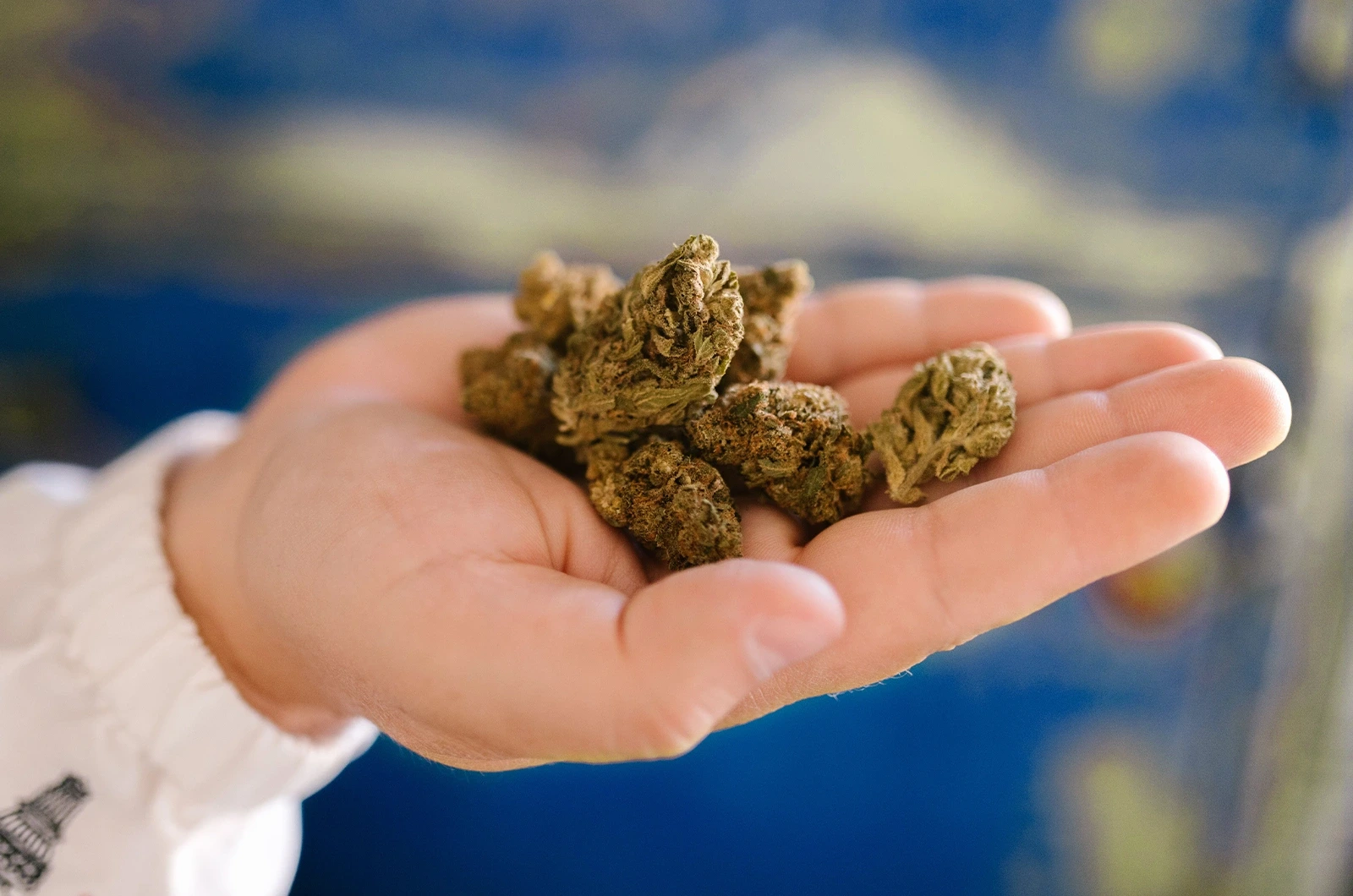
An eighth of weed fits easily in the palm of your hand. Depending on bud size, it might be two or three chunky nugs or a small pile of smaller ones.
Density changes the picture more than anything else. Tight indoor buds pack 3.5 grams into a small space, and fluffier sun-grown flower can look like more weed at the exact same weight. That's why two eighths can look nothing alike in the jar.
It's lighter than you'd guess, too. A full eighth weighs less than a U.S. nickel, which is 5 grams.
You'll also spot smalls on our menu. They're just smaller buds at the same weight. Either way, our eighths come pre-packed in sealed jars or bags with the net weight on the label, so nobody's eyeballing it on a scale.
How Much Does an Eighth of Weed Cost in California?
An 8th of weed costs between $22 and $71 on our menu before deals, with all taxes included. Those are real prices off our own shelves.
Putting the full price on the menu is part of what we call Weed for the People. It's the idea Catalyst was built on. Good weed should come at prices regular people can afford, with no hidden fees waiting at the register.
Our daily deals can cut top-shelf jars well below their sticker price. Prices and deals shift by store and by day, so your store's menu always has the live number.
Typical Prices by Shelf Tier
Our value shelf starts at $22, and our top shelf peaks at $71. The biggest group lands in the middle, between $41 and $55.
Shelf Tier | Price Before Deals | Brands on the Shelf | With Deals |
Value | $22 to $35 | Coastal Sun, Lolo, Preferred Gardens | $22 to $35 |
Mid-shelf | $41 to $55 | $28.70 to $55 | |
Top shelf | $59 to $71 | CAM, Claybourne Gold Cut, Alien Labs, Connected, Cannabiotix, Green Dawg | $44.25 to $70 |
The deal column is where the hookups show up. A Cannabiotix Cereal Milk eighth listed at $70 rings up at $52.50 when its brand deal hits, and a $59 CAM eighth drops to $44.25.
You can shop eighths at your nearest California store and filter the menu down to 3.5 grams.
That way you're only comparing eighths against eighths.
What Affects the Price of an Eighth
Some of what moves the price changes what's in the jar, and some of it only changes what you pay.
Grower and brand. The same 3.5 grams cost $22 from Coastal Sun and $70 from Cannabiotix on our menu. Craft growers with a following charge more for their name.
Grow method. Indoor flower takes more power and labor to grow than sun-grown, and the price reflects it. Greenhouse flower, also called mixed light, tends to land in between.
Strain and bud size. Hyped exotic strains carry a premium, and smalls usually cost less per gram than big, photogenic nugs.
THC percentage. Higher numbers often come with higher prices, even though THC is only one line on the label.
Freshness. Flower loses aroma with time and heat, so a recent packaging date is part of what you're paying for.
Taxes. Some menus show pre-tax prices and add tax at the register. Ours shows the final number.
Deals. Brand discounts on our menu run 20% to 40% off, and new deals drop daily.
Is a Bigger Size a Better Deal?
Yes, as long as you'll finish it while it's fresh. On the Coastal Sun and CAM flower we sell, the price per gram drops as the package gets bigger. The savings grow on the top shelf.
Size | Coastal Sun, Value Shelf | CAM, Top Shelf |
Eighth, 3.5 g | $22, about $6.29 a gram | $59, about $16.86 a gram |
Quarter, 7 g | $34, about $4.86 a gram | $93, about $13.29 a gram |
Half ounce, 14 g | $62, about $4.43 a gram | $162, about $11.57 a gram |
Four Coastal Sun eighths would run you $88, against $62 for a single half ounce. On CAM, four eighths cost $236 and the half costs $162, so the bigger jar keeps $74 in your pocket.
The one catch is freshness. A half ounce only beats four eighths if it still smells right at the bottom of the jar, so store it airtight in a cool, dark place. For a strain you've never tried, the eighth is still the smarter buy.
Prices change by store, and with Catalyst locations across California, the best hookup might be closer than you think. Find your nearest Catalyst to see what's on the shelf and what your eighth will actually cost.
Catalyst Rewards members earn 2 points per eligible dollar spent and can redeem up to $27 in points per transaction at participating stores. Check the terms before combining rewards with other deals.
How Many Joints Can You Roll from an Eighth?
An eighth rolls about seven half-gram joints or three full-gram joints with a little left over. Your real count depends on how heavy you roll.
If rolling isn't your thing, plenty of pre-roll packs add up to exactly an eighth. On our menu, a Coastal Sun 10-pack holds 3.5 grams for $22, the same as its loose eighth. A CAM 5-pack costs $46 against $59 for the jar.
Rolling your own still has an edge. Whole buds tend to hold their aroma better in storage, so grinding only what you need helps keep the rest of your eighth fresh.
What to Know Before Buying an Eighth in California
You must be 21 or older and have a valid government-issued photo ID to buy an eighth at a licensed California dispensary. Medical patients can buy at 18 with a physician's recommendation. Their daily limit is higher.
State regulations cap adult-use sales at 28.5 grams of flower per customer per day. That's eight eighths. Concentrates have a separate 8-gram cap, and our guide to California purchase limits covers the medical side.
Before you pay, flip the package over and read the label. California's labeling rules determine most of what's printed there, and these lines tell you what you're actually buying:
Net weight. It should read 3.5 g, and California requires the weight in both grams and ounces.
THC percentage. Labels list total THC as a percentage, so you can compare potency across brands on the same shelf.
Strain name and type. Check the strain name, and look for an indica, sativa, or hybrid tag when the package lists one. Our online menu tags most flower that way too, which makes it easy to find something close to what you liked last time.
Packaging date. Every package in California carries one. Fresher flower holds more of its aroma.
Testing. The UID number ties the package to California's track-and-trace system, and legal flower has to pass state-required lab testing before it reaches a shelf.
Cat 4 is our own extra step. It's an expanded pesticide screen we pushed for after pesticides that California labs didn't routinely test for turned up in legal products. Brands opt in, and products that pass carry a Cat 4 sticker. The results also help decide what makes our shelves.
It adds a layer of screening on top of state testing. No test makes a product risk-free, and we'd rather tell you that straight.
Find Your Eighth at a Catalyst Near You
Every eighth on our flower menu is priced with tax in, and new deals drop daily. That's what Weed for the People looks like on a receipt.
Our budtenders actually smoke what they sell. Tell them your budget, and they'll find you the best eighth for it. Then pick your nearest Catalyst from our stores across California, order your eighth online, and it'll be waiting at the counter when you walk in.
Eighth of Weed FAQs
How Many Eighths Are in an Ounce?
There are eight eighths in an ounce. Each eighth weighs 3.5 grams on a dispensary menu, so eight of them add up to 28 grams. A precise ounce weighs 28.35 grams, so an exact eighth is 3.54 grams.
Is an Eighth 3.5 or 3.54 Grams?
An exact eighth is 3.54 grams, because a true ounce weighs 28.35 grams. Dispensary menus round the ounce to 28 grams, which makes the eighth a clean 3.5. Go by the net weight on the label, since California requires every package to state it.
What's a Good Price for an Eighth in California?
A good price depends on the shelf you're shopping. On our menu, value eighths start at $22, mid-shelf runs $41 to $55, and top shelf peaks at $71, all tax-in. Compare price per gram and check whether a menu includes tax before calling anything a deal.
How Much Is a Quarter and a Half Ounce?
A quarter is 7 grams and a half ounce is 14 grams. On our menu, a Coastal Sun quarter costs $34 and a CAM quarter costs $93. Halves from the same brands run $62 and $162, tax included. Bigger packages can cost less per gram than eighths, but check the price after discounts.
Are Taxes Included in the Price of an Eighth at Catalyst?
Yes. Every price on our menu includes all taxes, so a $22 eighth rings up at $22 at the register. That covers California's 15% cannabis excise tax plus sales tax and any local taxes, and the same goes for every deal price on the menu.
How Many Eighths Can I Buy at Once in California?
Adults 21 and older can buy up to eight eighths of flower in a single day. California caps adult-use flower sales at 28.5 grams per customer per day. Eight eighths come to 28 grams. Medical patients can buy up to 8 ounces of dried flower a day, unless a valid physician's recommendation sets a different amount.